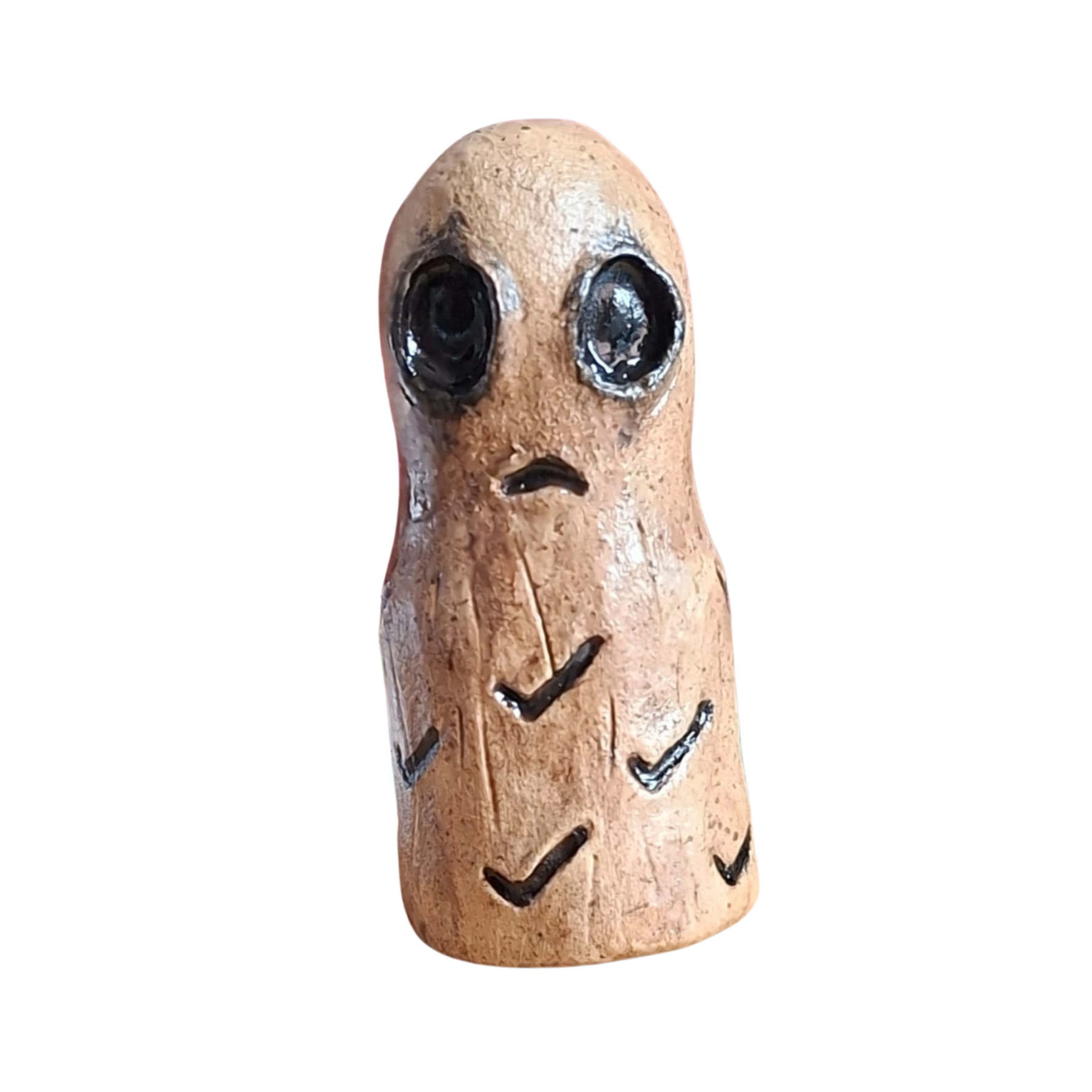
THE ARCHIVE
BEFORE THE ARCHIVE
The Grim Archives did not begin with a name.
It began with a collection of unexplained observations, handwritten reports and accounts of small entities appearing alongside persistent human experiences.
At first, the records were kept separately — filed as folklore, coincidence or unexplained personal testimony. But the same descriptions continued to surface in places and lives with no apparent connection to one another.
By 1904, there were too many records to dismiss.
The earliest surviving archive material does not identify a founder. Several names appear throughout the first files, but none claim responsibility for creating the collection.
What remains is a pattern: reports gathered from hospitals, boarding houses, workplaces, railway stations and private homes. Each account described a small companion entity appearing during repeated periods of distress, exhaustion, uncertainty or unresolved thought.
These early records formed the basis of the first classification system. Entities were no longer treated as isolated curiosities. They were observed, compared, named and filed.
THE YEARS OF
QUIET OBSERVATION
As the collection grew, coincidence became increasingly difficult to defend.
Reports continued to arrive from different regions, describing entities with recurring forms, behaviours and responses. Some appeared during periods of uncertainty. Others were repeatedly associated with frustration, exhaustion, isolation or unresolved thought.
The Archive began comparing records across years and locations. Similar accounts were grouped together. Distinct patterns were identified. What had once been filed as unexplained incidents became the beginnings of a classification system.
Throughout these years, observation remained deliberately quiet. The entities were recorded, studied and named — but rarely discussed beyond the Archive.
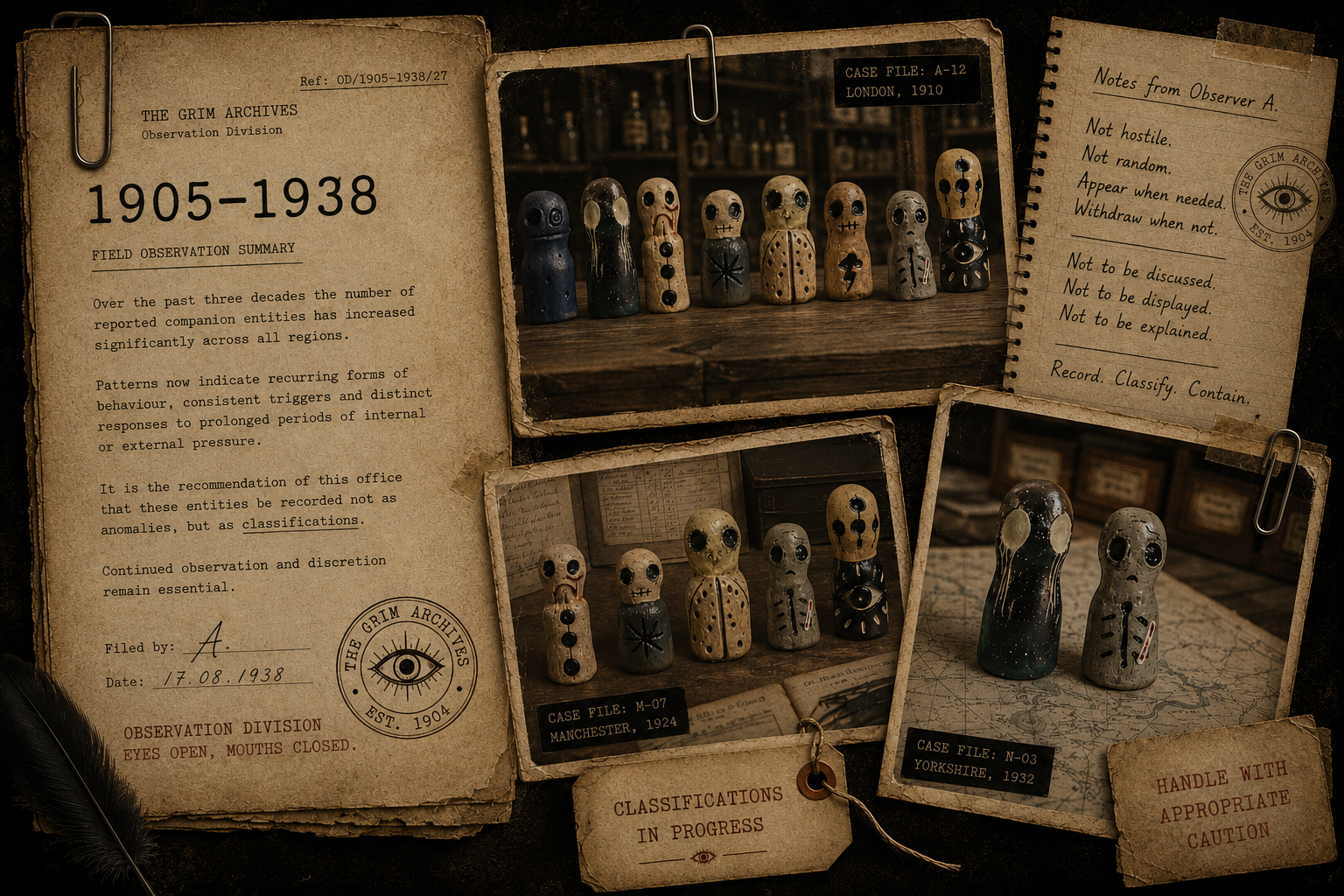
THE ARCHIVE
EXPANDS
By the middle of the century, the Archive had become more than a collection of unusual reports.
Field notes were copied, cross-referenced and compared against earlier observations. Repeated behaviours were assigned provisional names. New entity types were separated from older files when their patterns became too distinct to ignore.
The first formal containment guidelines were written during this period, though most were less concerned with danger than with discretion. The Archive did not seek attention. It sought consistency.
“Where reports repeat, classification must follow. Where classification fails, further observation is required.”
A CHANGE
IN THINKING
The question changed.
It was no longer “What are they?”
It became “Why do they appear?”
By the late twentieth century, the Archive began reviewing older records with a different kind of attention.
The entities were not appearing at random. Their arrival often followed familiar patterns: repeated worry, spiralling thought, irritation, avoidance, loneliness, pressure or exhaustion.
This changed the purpose of the Archive’s work. Observation remained important, but containment alone no longer explained the evidence. The records suggested that many entities were less like intruders and more like companions formed around difficult human experiences.
From this period onward, the Archive began using the term “companion entity” more frequently in internal notes, though public release remained strictly prohibited.
THE ARCHIVES
BEGIN TO OPEN
For the first time in its history, the Archive began to question whether secrecy was still necessary.
Decades of observation had produced the same conclusion repeatedly: many companion entities showed no interest in causing harm. They remained close to the people around whom they had formed, often displaying behaviours that were strange, inconvenient or deeply irritating — but rarely dangerous.
The old systems of containment were gradually replaced with longer periods of observation, classification and supervised release assessment.
Records once considered unsuitable for public knowledge were reopened. Forgotten entities were reclassified. New arrivals were documented under revised procedures.
The Archive had spent more than a century keeping them hidden.
It was time to consider letting them out.
OPENING
ONGOING
ACTIVE
RESTRICTED
PENDING
REQUIRED